IPT: The Trojan Horse of Intracellular Lyme Therapy

The absolute biggest hurdle in chronic Lyme therapy is no longer the lack of potency of our pharmaceutical drugs (antibiotics). The true problem facing all clinics is Drug Delivery – a massive transportation crisis. From the forensic viewpoint of nanopathology and high-resolution electron microscopy, we know exactly why macroscopic medicine fails: Bacteria simply entrench themselves in intracellular safety bunkers. This is where IPT () steps in as a bio-mechanical "Trojan Horse".
The Cellular Barrier: Why Standard Antibiotics Bounce Off
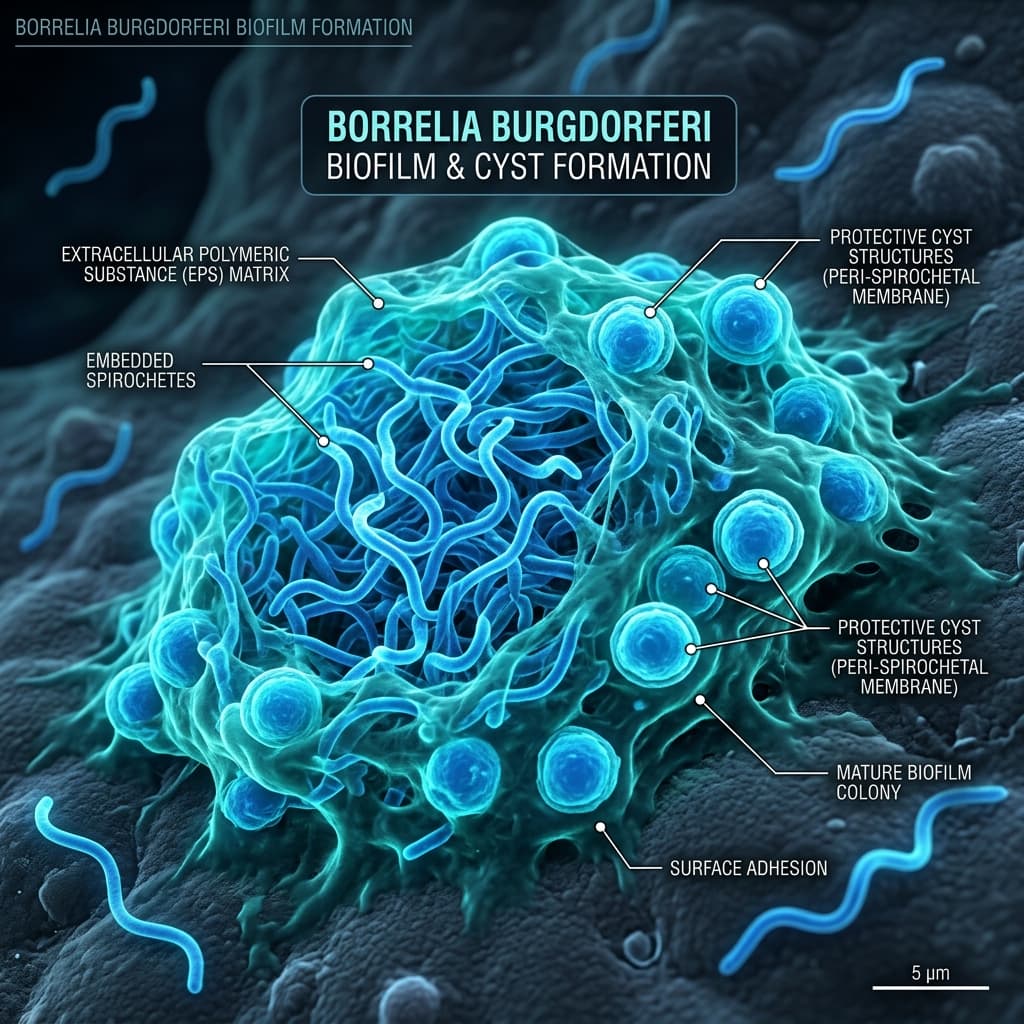
When an infection with Borrelia burgdorferi chronifies, the pathogen no longer swims aimlessly and unprotected around the blood plasma. The bacteria physically penetrate the cytoplasm of macrophages, the deep fibrous layers of fibroblasts, and eventually the endothelial cells of the central nervous system.
High-dosed intravenous broad-spectrum antibiotics may flood the patient's blood plasma for days on end, but they barely penetrate the dense cellular membrane of our own infected cells. The depressing result: The peripheral blood plasma becomes highly toxic (which massively burdens healthy liver and kidney tissue), the patient suffers from enormous side-effects, continuous Candida fungal infections, and dysbiosis – while the intracellular L-form cysts of the Borrelia remain completely safe and untouched inside their intracellular bunkers.
Insulin as the Cellular Skeleton Key
To shatter this fatal cellular barrier, we must creatively harness biology against itself. All massively inflamed, chronically infected biological tissues, as well as tumor cells, share one exact, targetable characteristic: Their enormous, virtually parasitic demand for energy-rich glucose. Bacterial colonies force the human cell into a primitive fermentation process (anaerobic glycolysis).
To satisfy this massive demand for sugar, the host cell reacts with heavily accelerated gene expression. It forms a drastically increased number of insulin receptors (IGF-1 and cell-insulin receptors) on its surface. The infected cell constantly "starves" for energy. In Insulin Potentiation Therapy (IPT), this exact biological fact is manipulated. We intentionally induce a medically strictly controlled, temporary hypoglycemia (low blood sugar) through the venous injection of microscopically tiny amounts of human insulin to trigger a strong cellular survival reflex.
The Hypoglycemia Window (The Therapeutic Moment)
The infused insulin acts as the ultimate biochemical key. It attaches itself to the multiplied outer receptors and effectively "ripps open" the previously tightly sealed cellular transport channels (aquaporins and cell membranes) as wide as possible. The cells switch into an absolute reception mode and urgently await new sugar. Exactly in this precise "window of desperate expectation", we infuse a standard glucose solution that has been bound ("armed") with a highly specific antimicrobial peptide or antibiotic.
Intracellular Eradication & Antigen Unmasking
The cells – panicking driven by the systemic insulin distortion signal – eagerly and entirely swallow the presented "active-substance-sugar-cocktail". Riding piggyback via this active transport mechanism, the tightly declared antibiotic is pulled in previously unattainable, astronomical concentrations directly into the protective intracellular vacuole, exactly where the Borrelia L-form is hiding. The infectious enemy is thus successfully eliminated for the first time behind its own intact defensive walls.
Advantages: Micro-Dosing & Systemic Safety
Perhaps the most fascinating outcome of IPT therapy is the massive, almost complete reduction of severe drug side effects. Because we no longer have to leave cell transportation to pure chance and a simple concentration gradient (diffusion), we no longer require gigantic, overwhelming amounts of toxic pharmaceuticals circulating aimlessly in the bloodstream.
Microbiome Preservation
In many advanced clinical constellations, we can lower the administered drug dosage via insulin potentiation to a mere 10 to 20 percent of the usual standard dose – while achieving exactly identical (or even vastly superior) intracellular killing efficacy. Through this strategy, the sensitive enteric nervous system in the gut remains completely intact. The healthy gut bacteria in the microbiome are spared, which firmly prevents the fatal immunological collapse typically observed following blind long-term antibiosis.
Outsmarting the Blood-Brain Barrier
Especially traversing severe Neuro-Lyme variants, medications that physically cannot penetrate into the brain are completely worthless. The brain, however, possesses a profound natural peculiarity: It burns enormous, relentless amounts of glucose merely to maintain neuroelectric charge. Facilitated by the active carrier molecule insulin, the otherwise extremely dense blood-brain barrier willingly "opens up" for the sugar-antibiotic compound. This allows us to achieve an effective, intracerebral inflammation clearance for the first time, without having to undergo radical chemical poisoning of the entire cortex.
Conclusion
Insulin Potentiation Therapy (IPT) represents an extremely intelligent clinical paradigm shift. In treating Lyme disease, we no longer engage in a blind "trench warfare" of pushing vast drug quantities into blood vessels – a war the patient ultimately only pays for by permanently destroying their immunological tolerance limits. Instead, we use advanced nanopathology and targeted intracellular hacking to force chronic defensive barriers to actively open up and embrace the cure.
Scientific References & Evidence-Based Studies
- [1]
Ayre, S. G., et al. (1986): Insulin potentiation therapy: a new concept in the management of chronic diseases. Medical Hypotheses
- [2]
Gatti, A. M., et al. (2004): Detection of micro- and nano-sized biocompatible particles in the blood. Journal of Materials Science: Materials in Medicine
- [3]
Rhea, E. M., & Banks, W. A. (2019): Role of the Blood-Brain Barrier in Central Nervous System Insulin Resistance. Frontiers in Neuroscience