Le Champ de Bataille Cellulaire : Phytothérapie & Immunomodulation
Les conseils véhiculés par les magazines grand public pour renforcer le système immunitaire semblent inoffensifs et simples : "Mangez beaucoup de vitamine C et évitez le stress". Cependant, face à une infection chronique de la maladie de Lyme, cela revient à essayer de repousser une cyberattaque militaire avec un simple antivirus grand public. Borrelia burgdorferi est un maître absolu du camouflage moléculaire. Ce pathogène ne se contente pas d'affaiblir le système immunitaire — il reprogramme systématiquement nos macrophages et nos lymphocytes.
Récepteurs de type Toll : Le radar aveugle
Nos principales cellules tueuses (les macrophages) possèdent des récepteurs dits de type Toll (principalement ) qui scannent la circulation sanguine comme un écran radar actif à la recherche de parois bactériennes hostiles.
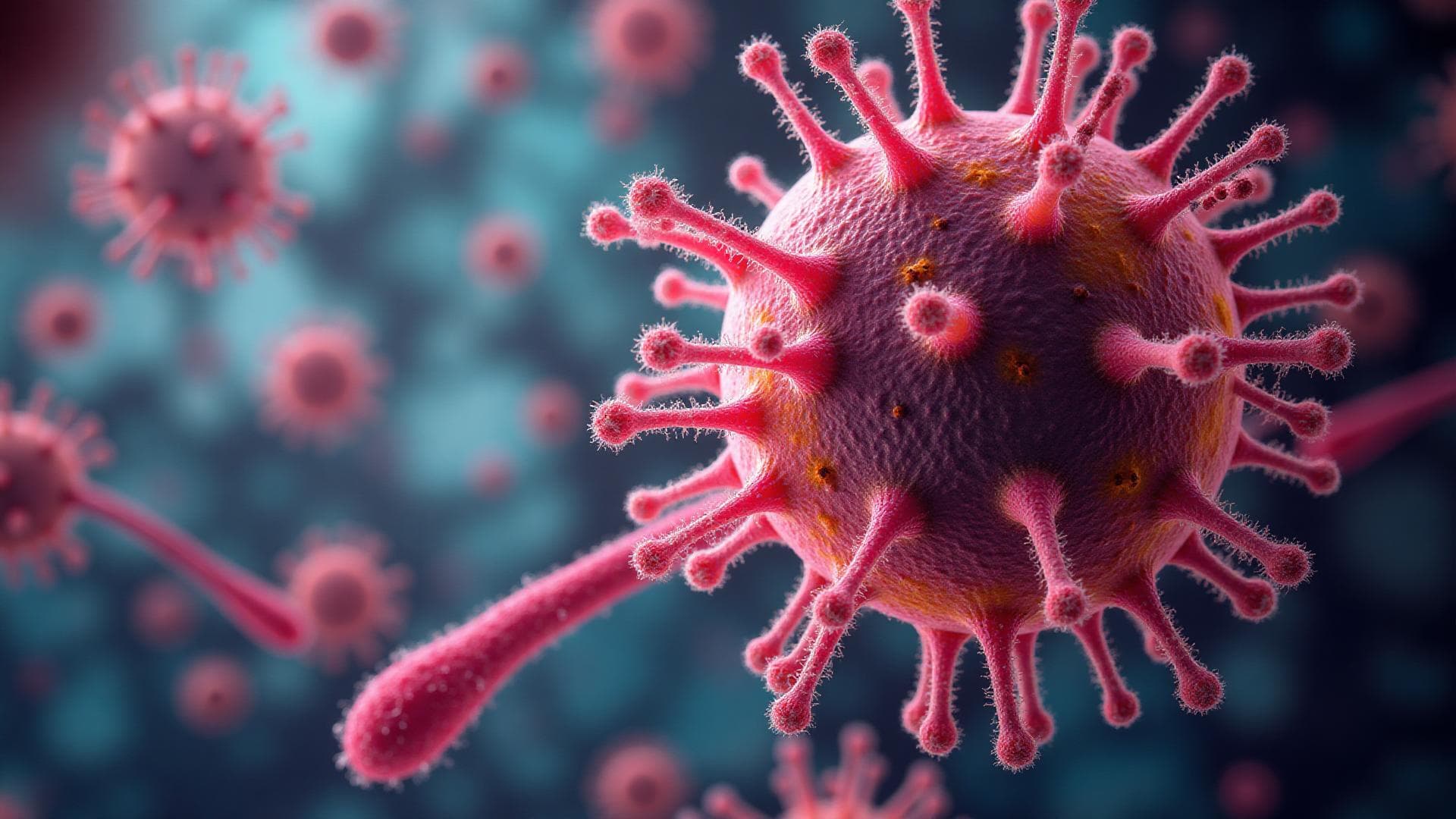
Les Borrelia réagissent au stress chimique d'un assaut antibiotique avec une tactique sans précédent : elles se débarrassent physiquement de leur paroi cellulaire spiralée protectrice et mutent pour devenir des Formes L (CWD - Cell Wall Deficient). Puisque le système immunitaire est programmé pour rechercher spécifiquement ces parois cellulaires, il ne trouve rien. Le "radar ennemi" reste inactif. La phagocytose macrophagique s'arrête complètement, tandis que les formes nues en L survivent indétectées et toxiques au plus profond des tissus conjonctifs.
Le Microbiome : Un Bouclier Effondré
L'intestin humain abrite plus de 80% du système immunitaire inné. La phase chronique tardive de la maladie de Lyme est très souvent le reflet d'une défaillance neuro-entérologique massive.
Des mois, voire des années de thérapies antibiotiques à l'aveugle déciment fondamentalement les lactobacilles et bifidobactéries protecteurs. Le résultat inévitable est une profonde dysbiose : des lipopolysaccharides transloqués (débris bactériens morts) font irruption à travers la délicate barrière intestinale, pénètrent dans le système veineux () et déclenchent des tempêtes inflammatoires systémiques. Dans ce chaos, les Borrelia peuvent proliférer sans la moindre entrave.
Polarisation Th1 vs. Th2
Le génie pathogène des spirochètes réside dans leur capacité à basculer l'équilibre lymphocytaire de l'hôte. Pour détruire les bactéries intracellulaires, le corps a besoin d'une réponse immunitaire Th1 tranchante. Par une manipulation enzymatique, les Borrelia contraignent le corps à adopter un état Th2 permanent (massivement allergique/inflammatoire). Le corps produit alors de façon chronique des réactions auto-immunes contre des éléments banals, mais "oublie" la phagocytose de la bactérie primaire.
Phagothérapie et Peptides
Pour briser cette impasse immunologique, la patience ne suffit pas. L'utilisation thérapeutique de bactériophages spécifiques ou de Peptides Antimicrobiens avancés (PAM) s'avère prometteuse. Ils brisent physiquement le camouflage des formes en L et présentent ces protéines précédemment masquées au système immunitaire endormi, réalisant ainsi un démasquage antigénique essentiel.
Révolution Phytothérapique : Samento et Artemisinine
Lorsque les antibiotiques synthétiques échouent contre les kystes persistants, la phytothérapie moderne offre des alternatives hautement efficaces basées sur la science clinique. Des études in vitro (menées par des chercheurs comme Eva Sapi ou Ying Zhang de l'Université Johns Hopkins) ont démontré de manière décisive que certains composés botaniques désintègrent puissamment les biofilms de Borrelia.
Samento & Banderol
Griffe de Chat (spécifiquement l'extrait dépourvu d'alcaloïdes TOA appelé Samento) et Banderol ont fait leurs preuves cliniques comme de puissants bactéricides. Dans toutes les études vérifiées, ils ont été capables de détruire avec succès le bouclier massif à structure compacte des complexes spirochètes, là où la doxycyline pure se montre inefficace.
Artemisia Annua (Armoise Annuelle)
L'artémisinine (un composé puissant anti-Malaria) possède une efficacité redoutable grâce à son attaque oxydative. Les co-infections parasitaires de Lyme, porteuses d'ions de fer, sont structurellement incapables de se défendre contre ce choc oxydatif. L'artémisinine les foudroie en brisant leurs membranes cellulaires avec son radical péroxyde.
Racine de Cardère (Dipsacus fullonum)
La Cardère ne tue pas nécessairement les bactéries par empoisonnement direct. Cependant, ses extraordinaires propriétés modifient le tissu conjonctif pour provoquer une "expulsion" des bactéries de leur cachette anaérobie vers la circulation sanguine. Cette remise en circulation de la bactérie active permet à notre défense naturelle phagocytaire de la reconnaître et de l'exterminer radicalement.
Pourquoi l'"Immunostimulation" est Dangereuse dans la Lyme Chronique
Dans les conditions neuro-inflammatoires dévastatrices d'une Lyme avancée, pratiquer l'immunostimulation (comme de fortes doses d'Echinacée) est une erreur extrêmement préjudiciable ! L'immunité déréglée, hyperactive et en totale réactivité inflammatoire Th2 n'acceptera nullement cette provocation, ce qui multiplie la neuropathie inflammatoire et endommage le réseau d'innervation local.
La vraie réponse clinique impérative est : L'Immunomodulation. C'est-à-dire recourir à la Mycothérapie (Reishi, Cordyceps) pour agir comme des maîtres régulateurs, ainsi qu'aux super suppléments purs comme le resvératrol pour freiner sèchement le cataclysme de la voie cellulaire NF-kB. Le but absolu de la manœuvre n'est pas de forcer la création d'émeutes immunitaires plus agressives, mais d'interrompre l'aveuglement destructeur en recalibrant avec précision nos cellules macrophages endormies vers leur proie naturelle originelle.
Conclusion
Dans notre ère de lutte moderne contre la persistance infectieuse, la bataille se gagne avec certitude au niveau des micro-récepteurs cellulaires. L'incursion par phytothérapie protéomique, c'est l'intelligence de décoder le signal toxique du biofilm et de reprogrammer nos défaillances immunitaires, sans oublier la réparation de notre soutien microbiotique intestinal.
Références scientifiques & Études fondées sur des preuves
- [1]
Sapi, E., et al. (2011): Effectiveness of Stevia Rebaudiana Whole Leaf Extract Against the Various Morphological Forms of Borrelia Burgdorferi. European Journal of Microbiology and Immunology
- [2]
Brogna, C., et al. (2021): Toxin-like peptides in plasma, urine and faecal samples from COVID-19 patients. F1000Research
- [3]
Feng, J., et al. (2020): Evaluation of Natural and Botanical Medicines for Activity Against Growing and Non-growing Forms of B. burgdorferi. Frontiers in Medicine